
Every winter, a large part of the traffic between Milan and the Alps crosses the Swiss border. Skiers head to St. Moritz, Zermatt, Davos, Verbier and Crans-Montana; business travellers drive to Lugano and Zurich. The distances are short by American standards, but the combination of borders, mountain roads and winter weather means there is more to think about than on a summer drive. Here is what changes when it gets cold, and what a professional driver takes care of.
Which border crossing
The route depends on the destination. For Lugano, Lucerne and Zurich, the usual crossing is Chiasso on the A9 motorway north of Como. For St. Moritz and the Engadine, the road goes along Lake Como to Chiavenna and crosses at Castasegna before climbing the Maloja Pass. For Zermatt, Crans-Montana and Verbier, the route from Malpensa runs to Domodossola and over the Simplon Pass into the Valais. Each has its own traffic patterns, and your driver chooses based on the conditions on the day.
The Swiss motorway vignette
Vehicles driving on Swiss motorways need a motorway vignette, sold as a sticker or as an electronic registration linked to the number plate. Rental cars from Italy do not always have one, and driving without it can lead to a fine. Our vehicles used for Swiss routes are equipped with it, so you do not need to buy or register anything.
Winter tyres and chains
In Italy, many roads, especially in mountain areas, require winter tyres or chains on board during the winter season, with dates set by local ordinances and usually running from mid-November to mid-April. In Switzerland there is no single national winter tyre obligation, but drivers whose vehicles are not suitably equipped can be held responsible if they cause an obstruction or an accident, so winter tyres are the norm. Our cars for mountain routes run on winter tyres and carry chains.
Mountain passes in winter
The main routes to the big Swiss resorts are kept open in winter, but conditions change quickly. Snow can slow the Maloja road on the way to St. Moritz, and when it makes more sense, the Julier Pass is the usual alternative. The Simplon Pass to the Valais is a major road kept open in winter, though heavy snowfall can still cause delays. Our drivers check road reports before departure and adapt the route if needed.
Documents at the border
Switzerland is part of the Schengen area, so systematic passport checks are not normal, but spot checks happen and you must carry a valid passport or identity card. Non-EU visitors should keep their passport at hand. Switzerland is outside the EU customs union, so goods above the duty-free allowances must be declared. For most ski holidays this is not an issue, but it is worth knowing if you carry expensive equipment bought in Italy.
Timing your departure
On winter weekends, especially on Saturdays when chalet rentals change over, traffic on the roads to the resorts is heavier, and the last climb can be slow. Leaving early in the morning makes a noticeable difference. On the return, Sunday afternoons are the busiest time towards Milan. Your driver will suggest a departure time based on your flight and the expected traffic.
Choosing the vehicle for winter
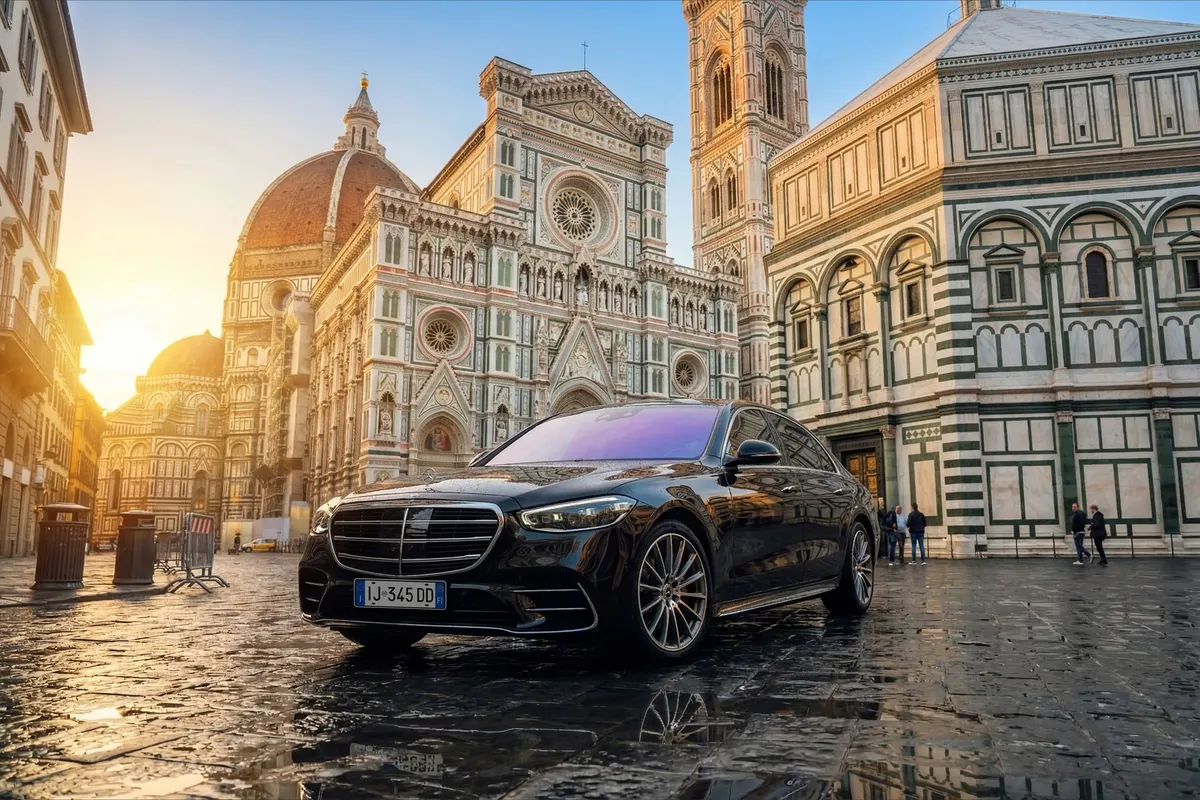
For winter trips with ski equipment, the Mercedes V-Class is the most practical choice: up to seven seats, space for skis and boot bags, and a comfortable cabin for long drives. Couples travelling light may prefer the S-Class. For larger groups, the Sprinter Luxury VIP carries up to eight with luggage. Tell us about your equipment when you book.
From the airport straight to the slopes
Most visitors to the Swiss Alps from abroad land at Malpensa, which is on the right side of Milan for the north. A direct transfer from the arrivals hall to your resort avoids an extra night in the city: Zermatt's Täsch terminal is about 2 h 45 from Malpensa, St. Moritz about 3 h 15 and Verbier about 3 h 25 in normal traffic.